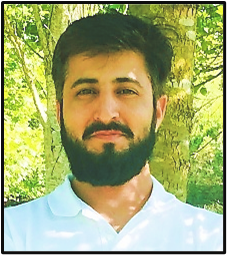
Dr. Anup Paul is a researcher with over 15 years of international experience in environmental and energy-related materials chemistry, with a strong focus on sustainable technologies for energy conversion, carbon utilization, and environmental remediation. His research focuses on the design and development of functional materials, particularly metal–organic frameworks (MOFs), coordination compounds, and electrocatalytic systems, for applications in hydrogen production (HER/OER), CO₂ capture and utilization, wastewater treatment, VOC removal, and energy storage and conversion.
Following his Ph.D., Dr. Paul held several prestigious international postdoctoral positions, including fellowships from CONICET (Argentina), Banaras Hindu University, Varanasi (India), and the Fundação para a Ciência e a Tecnologia (FCT, Portugal). He subsequently joined Instituto Superior Técnico (IST), Lisbon, where he established an independent research line on porous functional materials for catalysis and energy-related applications.
Since 2025, he has been working as a Researcher at VALORIZA Research Centre, Portalegre Polytechnic University, Portugal, contributing to several major European-funded projects, including I3-4-BIOFERTILIZERS, H2Excellence (Erasmus+), H2tALENT (Horizon Europe), and PYRAGRAF (Horizon Europe), focusing on hydrogen technologies, circular bioeconomy, and sustainable resource valorization. Dr. Paul has authored 70 peer-reviewed publications and 4 book chapters, with over 1900 citations (Google Scholar) and an h-index of 26.